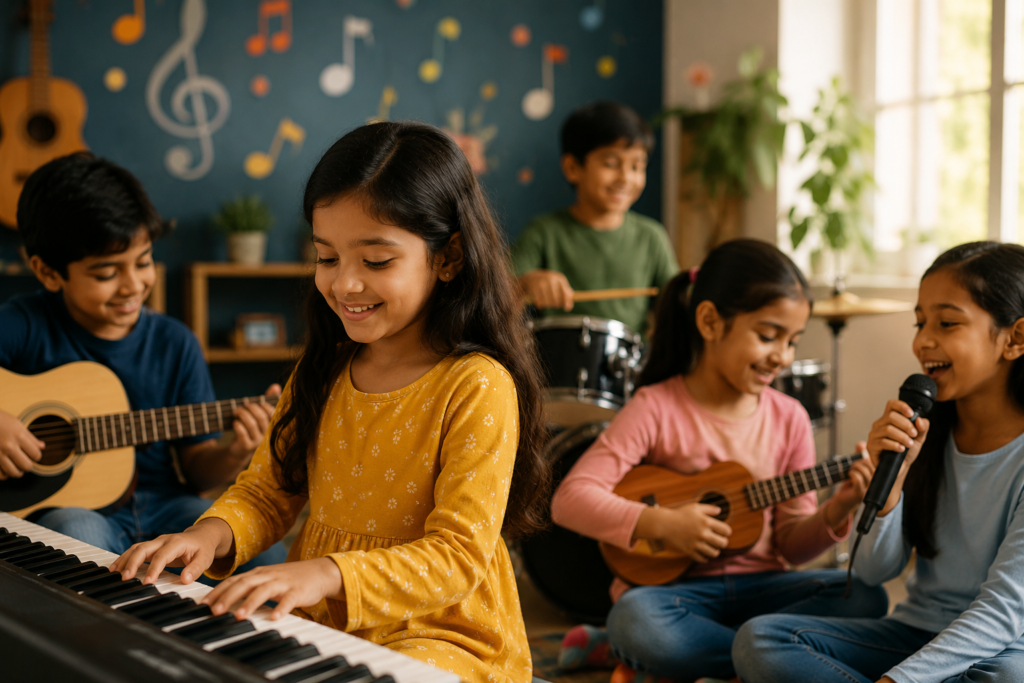
Music is much more than entertainment. It is a powerful tool that supports a child’s overall development. Whether a child dreams of becoming a professional musician or simply enjoys singing and playing an instrument, learning music from an early age provides lifelong benefits. It strengthens the brain, improves emotional well-being, builds confidence, and develops valuable life skills that extend far beyond music itself.
Parents often enroll their children in sports or academic coaching, but music education deserves equal attention. Studies have consistently shown that children who participate in music lessons perform better in school, communicate more effectively, and develop stronger social and emotional skills.
If you’re wondering whether music classes are the right choice for your child, here are ten compelling reasons why starting early can make a lasting difference.
1. Enhances Brain Development
One of the biggest benefits of learning music at an early age is its positive impact on brain development. Playing an instrument or learning vocal techniques activates multiple areas of the brain simultaneously. Children use their memory, listening skills, motor coordination, and problem-solving abilities while practicing music.
This continuous mental exercise helps strengthen neural connections and supports healthy cognitive development. Young learners often become better at processing information, recognizing patterns, and understanding complex concepts as they grow.
Music education also improves concentration, allowing children to stay focused for longer periods during both academic and creative activities.
2. Improves Memory and Concentration
Learning songs, musical notes, rhythms, and lyrics requires children to remember and recall information regularly. This repeated practice naturally strengthens both short-term and long-term memory.
Children who practice music consistently often demonstrate improved attention spans. They become better at concentrating on tasks, following instructions, and completing activities without becoming distracted easily.
These improved memory skills benefit school subjects such as mathematics, science, reading, and language learning.
3. Develops Discipline and Patience
Every musical skill requires regular practice. Children gradually learn that improvement doesn’t happen overnight but comes through dedication and consistency.
Practicing an instrument or vocal exercises teaches:
- Time management
- Self-discipline
- Responsibility
- Patience
- Goal setting
As children overcome small challenges during practice, they develop resilience and understand the value of hard work. These habits become useful throughout their academic and professional lives.
4. Builds Confidence and Self-Esteem
Performing in front of teachers, classmates, family members, or audiences helps children become more confident. Each successful performance increases their belief in their own abilities.
Music encourages children to express themselves without fear of making mistakes. As they master new songs or instruments, they experience a sense of achievement that boosts self-esteem.
Confident children are often more willing to participate in classroom discussions, extracurricular activities, and social events.
5. Encourages Creativity and Imagination
Music naturally stimulates creativity. Children explore different melodies, rhythms, and sounds while learning to interpret music in their own unique way.
Creative thinking developed through music also supports other activities such as:
- Storytelling
- Drawing and painting
- Dance
- Writing
- Problem-solving
Children who engage in creative activities often become more innovative thinkers and better decision-makers later in life.
6. Improves Communication and Language Skills
Music and language are closely connected. Singing songs helps children improve pronunciation, vocabulary, listening skills, and speech development.
Learning lyrics introduces new words and sentence structures, while rhythm helps children understand the natural flow of language.
For younger children especially, music supports early language development by improving their ability to recognize sounds, syllables, and speech patterns.
These communication skills become valuable both inside and outside the classroom.
7. Strengthens Social Skills
Music is often learned and performed in groups, giving children opportunities to collaborate with others.
Whether participating in a choir, band, ensemble, or classroom performance, children learn how to:
- Work as a team
- Respect others
- Listen carefully
- Cooperate
- Support fellow performers
These experiences help children build friendships while improving empathy and emotional intelligence.
Group music lessons also teach leadership and responsibility in a positive learning environment.
8. Supports Emotional Well-Being
Children experience many emotions as they grow. Music provides a healthy way to express happiness, excitement, sadness, or frustration.
Playing an instrument or singing can reduce stress and anxiety while improving mood. Music helps children relax after busy school days and provides emotional balance during challenging situations.
Many educators believe music also encourages mindfulness by helping children focus on the present moment.
As emotional awareness develops, children become better at understanding and managing their feelings.
9. Improves Academic Performance
Music education strengthens several academic skills simultaneously.
Research has shown that children involved in music often perform better in subjects such as:
- Mathematics
- Reading
- Science
- Language Arts
Reading musical notation develops pattern recognition and analytical thinking, while rhythm enhances mathematical understanding through counting and timing.
Music also improves listening comprehension, allowing students to absorb classroom lessons more effectively.
Rather than distracting children from academics, music often complements their education by developing skills that support learning across all subjects.
10. Creates Lifelong Appreciation for Music and Culture
Learning music introduces children to different cultures, traditions, and musical styles from around the world.
They begin to appreciate classical music, folk music, contemporary genres, and traditional instruments. This broad exposure helps develop respect for cultural diversity while expanding their artistic understanding.
Music also becomes a lifelong companion.
Even if children never pursue music professionally, they continue to enjoy singing, playing instruments, attending concerts, and appreciating various forms of artistic expression throughout adulthood.
Why Starting Early Matters
Early childhood is considered one of the most important stages of brain development. During these years, children absorb new skills quickly and adapt easily to structured learning.
Starting music education at a young age allows children to build strong foundations before other responsibilities increase.
Early learners often develop:
- Better listening abilities
- Improved coordination
- Stronger musical understanding
- Greater confidence
- Long-term interest in learning
The earlier children begin, the more naturally these skills become part of their daily lives.
Tips for Parents Choosing Music Classes
If you’re planning to enroll your child in music lessons, consider the following factors:
- Choose experienced and patient instructors.
- Select age-appropriate music programs.
- Encourage regular practice without creating pressure.
- Celebrate progress rather than perfection.
- Let your child explore different instruments before making a final choice.
- Attend performances and support their musical journey.
A positive learning environment keeps children motivated and excited to continue learning.
Conclusion
Music is one of the most valuable gifts parents can give their children. Beyond learning songs or playing instruments, music builds confidence, enhances brain development, improves communication, strengthens emotional health, and teaches discipline that lasts a lifetime.
Whether your child wants to sing, play the piano, guitar, violin, or any other instrument, beginning music education early creates opportunities for personal growth and lifelong success.
At Spardha School of Music, children receive structured guidance from experienced instructors in a supportive and inspiring environment. With personalized lessons, engaging teaching methods, and performance opportunities, young learners can develop their musical talents while building essential life skills that extend far beyond the classroom.