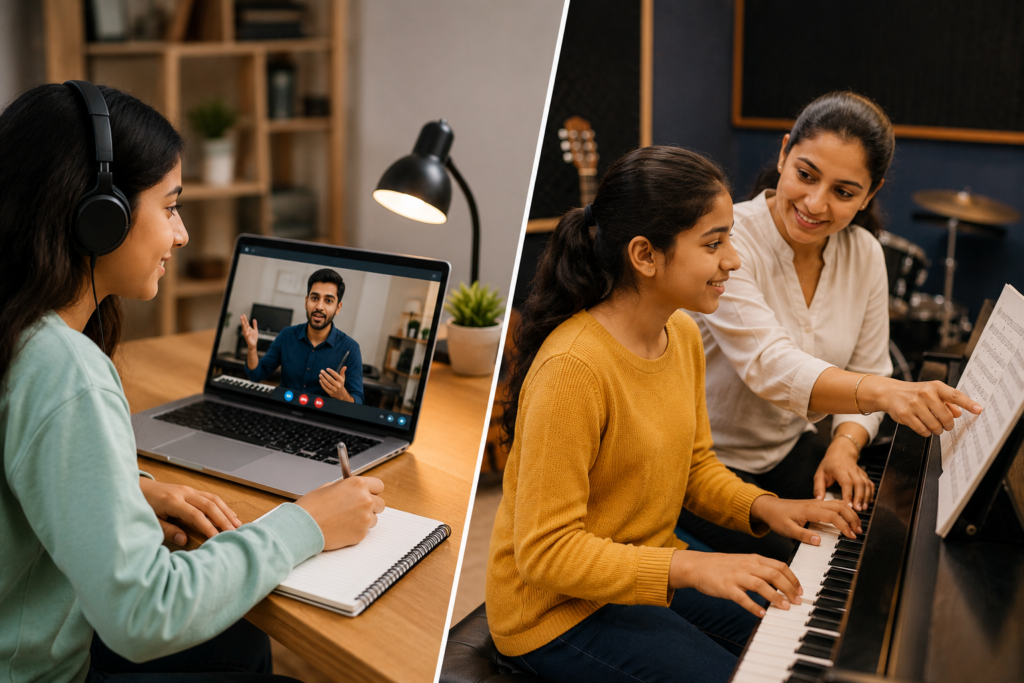
Learning music has become more accessible than ever before. Thanks to technology, aspiring singers and musicians can now receive professional training from the comfort of their homes through online classes. At the same time, traditional offline music classes continue to offer valuable hands-on learning experiences that many students prefer.
With both options available, many beginners and parents often ask the same question: Which one is better—online music classes or offline music classes?
The answer depends on your learning style, goals, schedule, and personal preferences. Both methods have unique advantages, and understanding their differences will help you make the right decision.
In this guide, we’ll compare online and offline music classes in detail so you can choose the learning method that suits you best.
Why Music Education Matters
Before comparing learning methods, it’s important to understand that quality music education goes beyond learning songs.
Music training helps students:
- Develop vocal or instrumental techniques
- Improve rhythm and timing
- Build confidence
- Enhance creativity
- Strengthen discipline
- Improve concentration
- Prepare for performances
Whether you choose online or offline learning, consistent practice and guidance are the keys to success.
What Are Online Music Classes?
Online music classes are conducted using video conferencing platforms where students learn from instructors remotely.
Lessons usually include:
- Live one-on-one sessions
- Group classes
- Recorded practice videos
- Digital assignments
- Online feedback
- Virtual performances
Students only need:
- A stable internet connection
- A smartphone, tablet, or computer
- Headphones (optional)
- Their musical instrument if learning one
Online learning has become increasingly popular because it allows students to learn from experienced teachers regardless of location.
What Are Offline Music Classes?
Offline music classes take place in a music school, academy, or private studio where students learn face-to-face with instructors.
Classes often include:
- Practical demonstrations
- Immediate corrections
- Group rehearsals
- Stage practice
- Live performances
- Direct interaction with teachers
Traditional classroom learning remains the preferred choice for students who enjoy personal interaction and structured environments.
Advantages of Online Music Classes
1. Learn From Anywhere
One of the biggest advantages of online learning is flexibility.
Students can attend classes from:
- Home
- College hostel
- Office
- Another city
- Even another country
There is no need to relocate or travel long distances.
2. Flexible Scheduling
Busy students and working professionals often struggle to attend fixed classroom sessions.
Online classes usually offer flexible timings, making it easier to balance:
- School
- College
- Work
- Family commitments
- Music practice
3. Access to Expert Teachers
Location is no longer a limitation.
Students can learn from highly experienced instructors who may not be available in their local area.
This allows learners to choose teachers based on expertise rather than geography.
4. Saves Travel Time
Offline classes often require commuting.
Online learning eliminates:
- Travel expenses
- Traffic delays
- Parking issues
- Time spent commuting
The saved time can be used for additional practice.
5. Recorded Sessions
Many online music schools provide recordings of classes.
Students can:
- Rewatch lessons
- Practice difficult sections
- Learn at their own pace
- Review teacher feedback
This feature is especially helpful for beginners.
Advantages of Offline Music Classes
1. Face-to-Face Learning
Nothing replaces direct interaction with a teacher.
Instructors can immediately correct:
- Hand positions
- Vocal techniques
- Posture
- Breathing
- Finger placement
These real-time corrections often improve learning speed.
2. Better Performance Practice
Music is meant to be performed.
Offline classes provide opportunities for:
- Stage rehearsals
- Group singing
- Band practice
- Live performances
- Music competitions
These experiences build confidence and stage presence.
3. Strong Student Community
Learning alongside other students creates a motivating environment.
Students can:
- Learn from peers
- Build friendships
- Perform together
- Share experiences
- Stay motivated
Group learning often makes the musical journey more enjoyable.
4. Fewer Technical Problems
Offline learning doesn’t depend on:
- Internet speed
- Audio delays
- Camera quality
- Software issues
Students can focus entirely on music without worrying about technology.
5. Structured Learning Environment
Music schools provide a dedicated learning atmosphere that minimizes distractions.
This helps students maintain discipline and stay focused during lessons.
Challenges of Online Music Classes
Although online learning offers flexibility, there are some limitations.
These include:
- Internet connectivity issues
- Audio quality limitations
- Camera angle problems
- Less physical interaction
- Possible distractions at home
However, good equipment and experienced instructors can minimize these challenges.
Challenges of Offline Music Classes
Traditional classes also have certain limitations.
Students may experience:
- Fixed schedules
- Travel time
- Transportation costs
- Limited teacher availability
- Weather-related disruptions
Busy professionals sometimes find it difficult to attend regular classroom sessions.
Online vs Offline Music Classes: Quick Comparison
| Feature | Online Classes | Offline Classes |
|---|---|---|
| Convenience | Excellent | Moderate |
| Teacher Interaction | Very Good | Excellent |
| Travel Required | No | Yes |
| Flexibility | High | Moderate |
| Performance Practice | Limited | Excellent |
| Group Learning | Moderate | Excellent |
| Cost | Often Affordable | Varies |
| Learning Environment | Home | Music School |
Which Option Is Better for Beginners?
For beginners, both options can be effective.
Choose online classes if you:
- Have a busy schedule.
- Live far from a music school.
- Prefer learning from home.
- Want access to expert teachers from anywhere.
Choose offline classes if you:
- Enjoy classroom learning.
- Need frequent hands-on guidance.
- Want regular stage exposure.
- Prefer face-to-face interaction.
Ultimately, the best learning method is the one that helps you stay consistent and motivated.
Can You Combine Both?
Yes.
Many students now choose a hybrid approach.
For example:
- Weekly offline classes
- Daily online practice sessions
- Recorded lessons for revision
- Live workshops and performances
This combination offers flexibility while maintaining personal guidance.
Tips for Success in Any Music Class
Regardless of the learning method you choose:
- Practice every day.
- Attend classes regularly.
- Record your progress.
- Ask questions.
- Stay patient.
- Perform whenever possible.
- Follow your instructor’s guidance.
Consistency matters far more than whether you learn online or offline.
Why Choosing the Right Music School Matters
Whether you’re learning virtually or in person, the quality of instruction is more important than the format.
A good music school provides:
- Experienced instructors
- Structured curriculum
- Personalized feedback
- Performance opportunities
- Supportive learning environment
- Progressive skill development
Choosing the right teacher can significantly accelerate your musical growth.
Conclusion
Both online and offline music classes offer excellent opportunities to learn, improve, and enjoy music. Online classes provide flexibility, convenience, and access to experienced instructors from anywhere in the world, while offline classes offer hands-on guidance, live interaction, and valuable stage experience.
The right choice depends on your lifestyle, learning preferences, and musical goals. Some students thrive in a classroom environment, while others appreciate the comfort and flexibility of learning from home.
At Spardha School of Music, students have access to both online and offline learning options, allowing them to choose the format that best fits their schedule and aspirations. With experienced instructors, structured courses, and regular performance opportunities, learners receive comprehensive music education designed to help them grow with confidence.